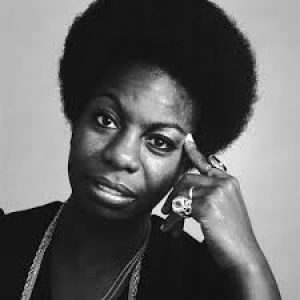
Nina Simone has been revered as one of the most extraordinary singers of the 20th century, or, to her preference, ‘the High Priestess of Soul’. She is known to have used her music, activism, and outspokenness as a platform to empower African Americans to fight for racial equality. Simone once stated that women play the biggest role in creating a better understanding of the world; her legacy did not contradict her.
Nina Simone musical style opposed any set form, her accounts mixing jazz, folk, classical piano and blues. She recorded incalculable notable songs amidst her vocation, including “Ne Me Quitte Pas,” “Feeling Better,” “I Put a Spell on You,” and the jazz staple, “My Baby Just Cares For Me.” In the 1960s, she shifted her focus to the Civil Rights Movement, crafting songs dedicated to spreading messages of equality, like “Mississippi Goddamn” and “To Be Young, Gifted and Black.” In 2018, was drafted into the Rock and Roll Hall of Fame, sealing her spot in musical history.
She sang numerous songs in her career which was at its peak in between 1960 and 2000. Nina, in her rough-edged voice, sang songs that were based on love, protest and black empowerment. Nina recorded almost 60 albums and composed over 500 songs
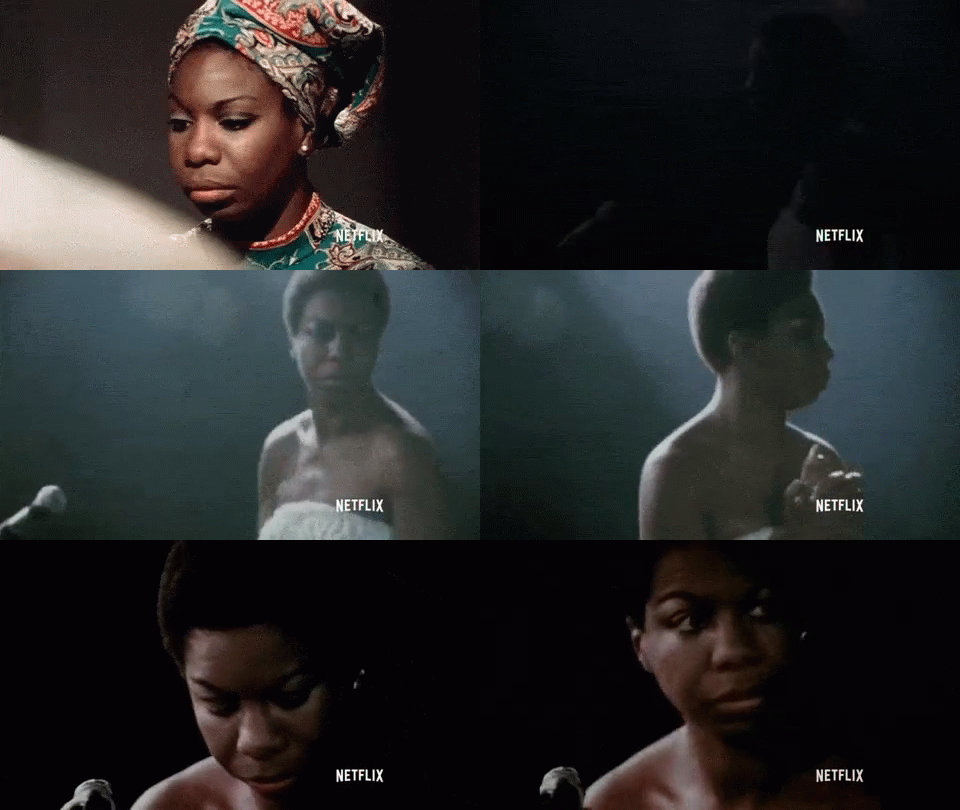
Nina Simone was born Eunice Kathleen Waymon on February 21st, 1933. In addition to taking on the piano at three years old, she took professional music lessons and began playing in her local Methodist Church at only seven. She quickly developed an admiration the traditional piano writers: Bach, Chopin, Beethoven and Schubert. When she graduated as valedictorian of her secondary school class and began studying at the world famous Julliard School in New York, her sole musical objective was to become world’s first African American classical pianist.
In the wake of her fervent desire to pursue classical piano, she was denied a grant to the Curtis Institute of Music in Philadelphia, one of the top musical universities in the country. Shocked by her rejection, she would go on to spend the rest of her life claiming that it was due to her race.
“They didn’t offer me the chance to begin as a dark traditional piano player. I was denied a grant since I was dark.”

After the abrupt end to her formal music preparing, Simone turned from classical music to the popular jazz and blues scene of the Atlantic City clubs around the 1950s, making her grand appearance sporting the name Nina Simone out of appreciation for the French on-screen character Simone Signoret. It was at an Atlanta that Simone was first discovered. She officially signed to King Records and recorded her breakout song, “I Loves You, Porgy” from the musical Porgy and Bess in 1960.
“Critics started to talk about what sort of music I was playing, and tried to find a neat slot to file it away in. It was difficult for them because I was playing popular songs in a classical style with a classical piano technique influenced by cocktail jazz. On top of that I included spirituals and children’s song in my performances, and those sorts of songs were automatically identified with the folk movement. So, saying what sort of music I played gave the critics problems because there was something from everything in there, but it also meant I was appreciated across the board – by jazz, folk, pop and blues fans as well as admirers of classical music.”
By the mid 1960s, Simone found herself on the outskirts of the music scene, her focus completely shifted to the Civil Rights Movement. She participated in the Selma to Montgomery walks, found herself at local protests, and even spoke at rallies; full of rage. Following the murder of four African American children in the Burlington Alabama Church bombing, Simone reached her breaking point. Instead of resulting to physical violence, she began writing, releasing on of the most pertinent Civil Rights songs in history, “Mississippi Goddam”. She additionally secured Billie Holliday’s “Strange Fruit” and composed the gospel-fused “To Be Young, Gifted and Black,” in memory of her late companion, playwright Lorraine Hansberry.
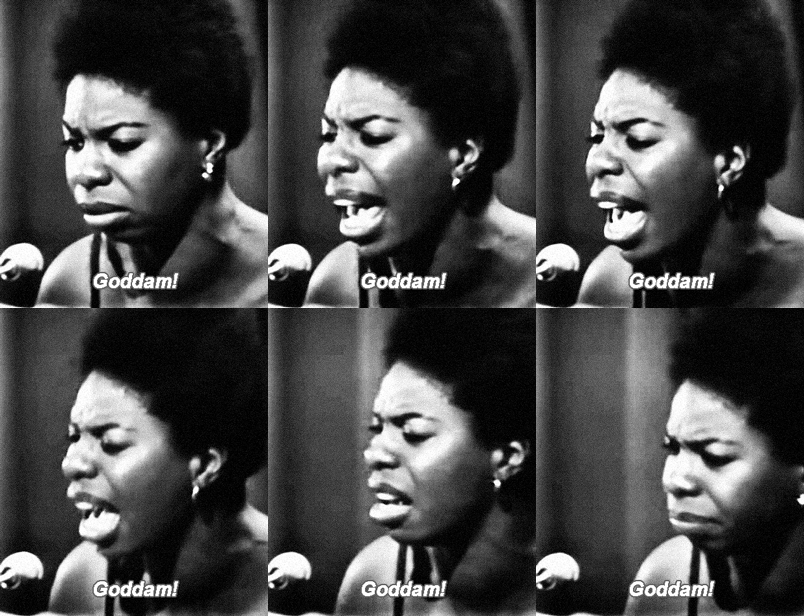
“Nightclubs were dirty, making records was dirty, popular music was dirty and to mix all that with politics seemed senseless and demeaning. And until songs like ‘Mississippi Goddam’ just burst out of me, I had musical problems as well. How can you take the memory of a man like [Civil Rights activist] Medgar Evers and reduce all that he was to three and a half minutes and a simple tune? … But the Alabama church bombing and the murder of Medgar Evers stopped that argument and with ‘Mississippi Goddam,’ I realized there was no turning back.”
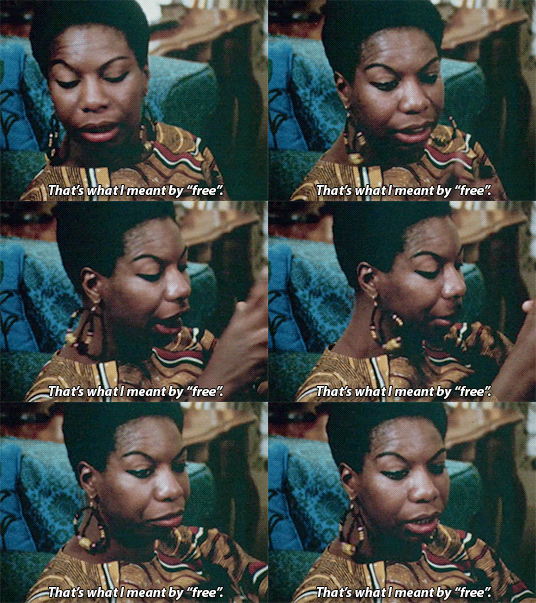
By the late 1960’s, Simone was officially worn out from fighting against racial degradation and separated governmental issues in America, exiling to Liberia. Following her move, and into the 1970’s Simone began to neglect her music career, battling emotional hardship. She went on to record a handful of albums while abroad, but none of them reached the level of success she had previously been used to. However, Simone musical career underwent a brief resurgence during the 1980s, thanks to a limited extent to a Chanel fragrance add that highlighted her 1960’s track “My Baby Just Cares for Me.” The tune came to went up to 5th on the UK charts and prompted a restored enthusiasm for Simone’s work. However, at this point and into the 90s she was giving pretty infrequent performances, mostly to express her love of music. Simone passed away in 2003 after a long battle of breast cancer in her South of France home.
 Nina Simone Final Project